
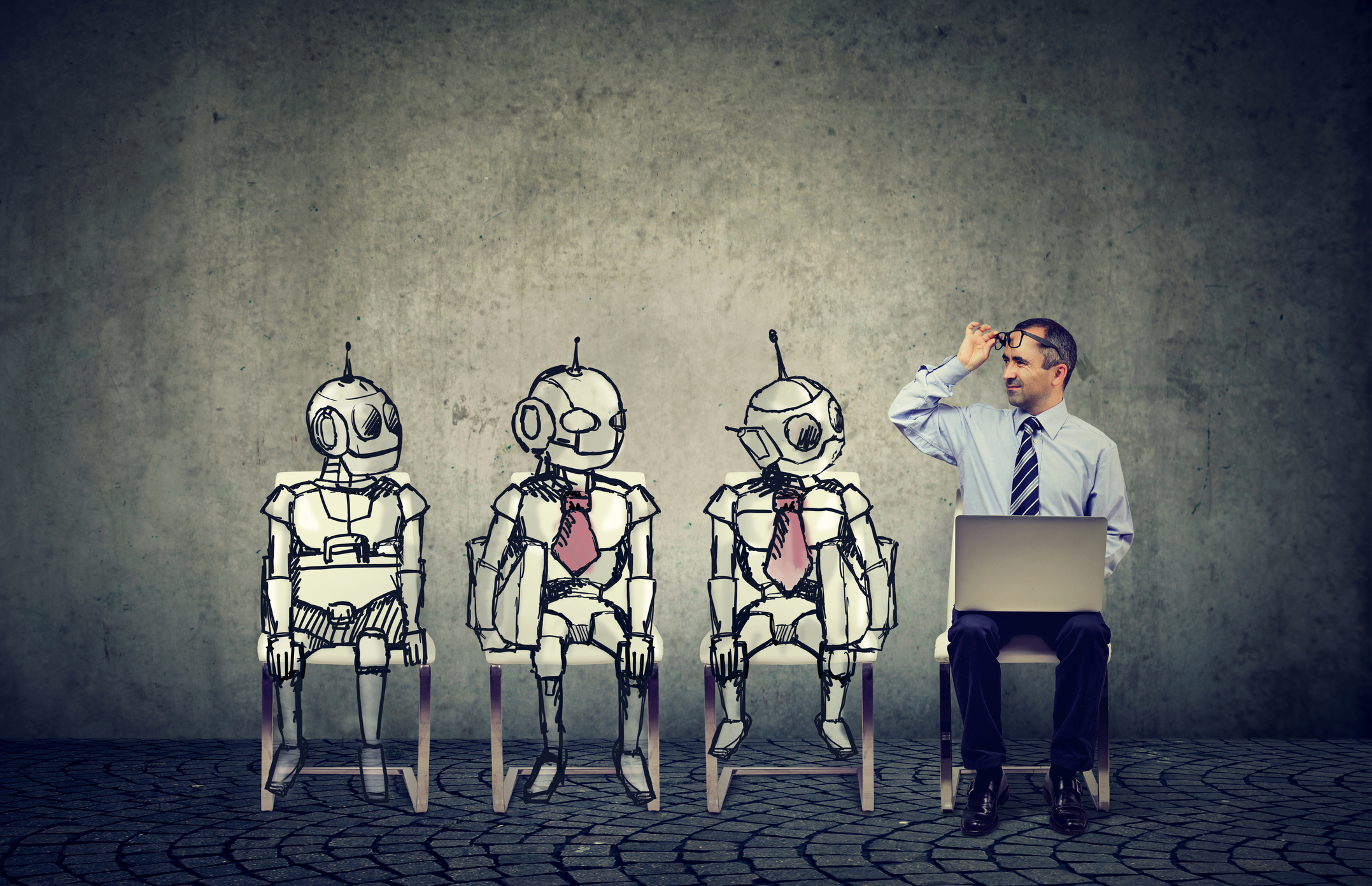
Humans are underrated. In April 2018, Elon Musk used these exact words to acknowledge that the attempt to fully automate a factory producing Tesla automobiles had failed.
In reality, human workers were performing a multitude of unpredictable tasks that constantly arose within a factory without being part of any job description. For instance, they could pick up a fallen part or report a malfunction observed elsewhere than at their own station. Robots were, by definition, only programmed to perform the sequence of actions for which they were intended. Yet, without the daily initiatives of human workers—seemingly insignificant on the scale of an industrial site—the entire system lost its coherence and ceased to function, like a puppet deprived of even the tiniest portion of its strings.
It would seem, then, that the best automated production line in the world cannot ensure that a factory runs correctly. Similarly, the most impressive data pipeline, featuring the latest data lakes and data management systems, is not enough to develop meaningful insights. Understanding the logic and patterns of human action requires “leaps” and effects of transversal thinking, playing on parallels and coincidences.
These types of processes are generally gathered under the notions of intuition or inspiration. Culture, in the sense of erudition, is only one piece of this puzzle. Currently, only this aspect of our culture is accessible to an AI, which possesses an unparalleled capacity to remember and mobilize a vast volume of knowledge. However, as important as it may be, erudition is not enough to create “happy connections” in a repeated and predictable manner. Certainly, neural networks can produce intuitions—in the sense that the steps separating the accumulation of facts from the conclusion are confined within a black box—but the configuration required for that intuition to be right, other than by chance, represents a significant volume of skilled work by a human capable of distinguishing a good intuition from a machine’s “delusion” (hallucination).
A regime of interaction is therefore necessary between human and artificial intelligences. According to Thomas Malone, founder of the MIT Center for Collective Intelligence (and author of The Future of Work), these interactions can be of three types: substitution, augmentation, and collaboration. Indeed, if the machine intervenes as a relay for the human to provide the capacities of its own type of intelligence, it becomes possible to develop more nuanced and in-depth visions of the audience by using large volumes of data. For this reason, À Nos Mots study protocols are particularly suited to large-scale communities composed of a plurality of groups with sometimes divergent motives and interests, in a context where it is more important to hear each component than to force a consensus.