
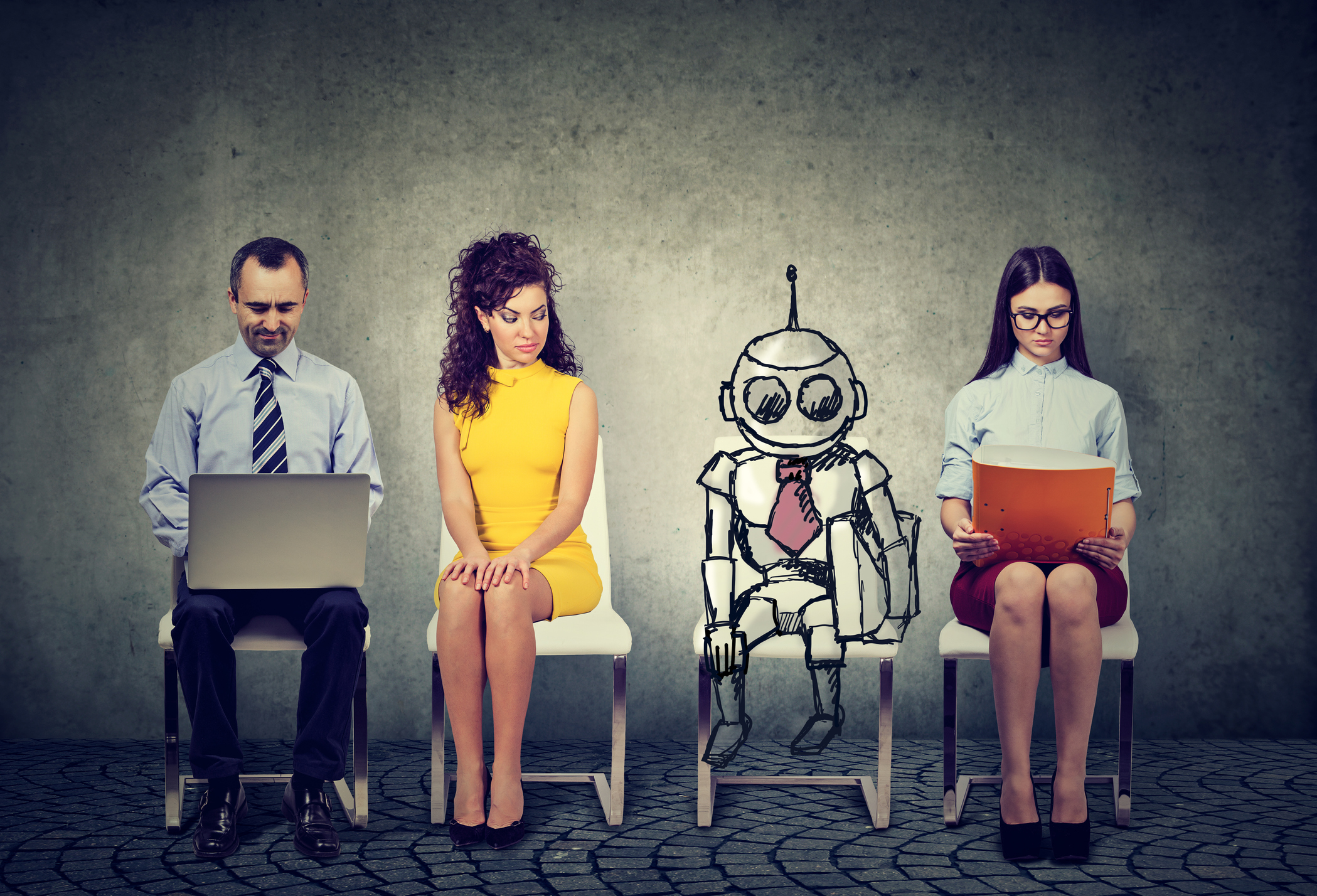
Since the beginning of the year, predictions have been flying: will ChatGPT kill off this or that profession or industry?
Authors are now evaluating the possible disappearance of entire training programs. For instance, Christian Terwiesch wondered if GPT-3 signaled the death knell for the MBA: https://mackinstitute.wharton.upenn.edu/2023/would-chat-gpt3-get-a-wharton-mba-new-white-paper-by-christian-terwiesch. That was in January, before the release of GPT-4. This successor model to ChatGPT jumped from the bottom decile (reached by ChatGPT) to the top decile on the Uniform Bar Exam. Concretely, this means that nine out of ten human candidates scored lower than OpenAI’s product. What lies ahead for marketers and communicators, whose very job is to manipulate language?
To see more clearly, a return to fundamentals is necessary. Starting with the three-part essay… Let us note in the introduction that ChatGPT is called a generative AI because it generates words. The GPT model functions, to some extent, like a statistical regression: based on a certain amount of data, it tries to deduce the word or phrase that best completes the question being asked. These models appeared as an extension of autocorrect features. If you have ever sent a message that unintentionally betrayed your thoughts, transforming “peaceful” (paisible) into “painful” (pénible) or “lunch” (déjeuner) into “thinning” (dégarni), you can already see the limits of the system.
That being said, generative AI can considerably reduce the volume of work required to perform many tasks. For example, the operation aimed at converting a product’s technical sheet into brand content, such as a detailed description, has literally become a textbook case. OpenAI uses it in its training dedicated to ChatGPT. Therefore, the thesis is correct: a considerable volume of work will be automated in the near future.
However, programming—even in no-code—remains a technical exercise. Selecting results also presupposes having a clear vision of expectations. Indeed, it is necessary to understand the client as much as the brand and the product. Before that, it is essential to ensure that the system is not “hallucinating.” I was indeed speaking of an “autocorrect” (correcteur automatique) and not a “car corrector” (correcteur automobile).
Finally, the moment of synthesis emerges naturally. The profession is going to change. Many execution tasks will become quality control or prompt definition tasks. A crossover of skills will often be sought after. From a broader perspective, techno and humanist cultures are destined to reunite. The À Nos Mots team is an example of this new symbiosis. We bring together personalities from the humanities and social sciences as well as from physico-mathematical or computer science backgrounds. Everyone knows how to understand one another and develops their capacity to cross-reference expertise.
For our clients, we combine semiology and AI to obtain insights at scale. We are also here to talk to you about it, without hype or trivialization.
What lies ahead for marketers and communicators, whose very job is to manipulate language?