
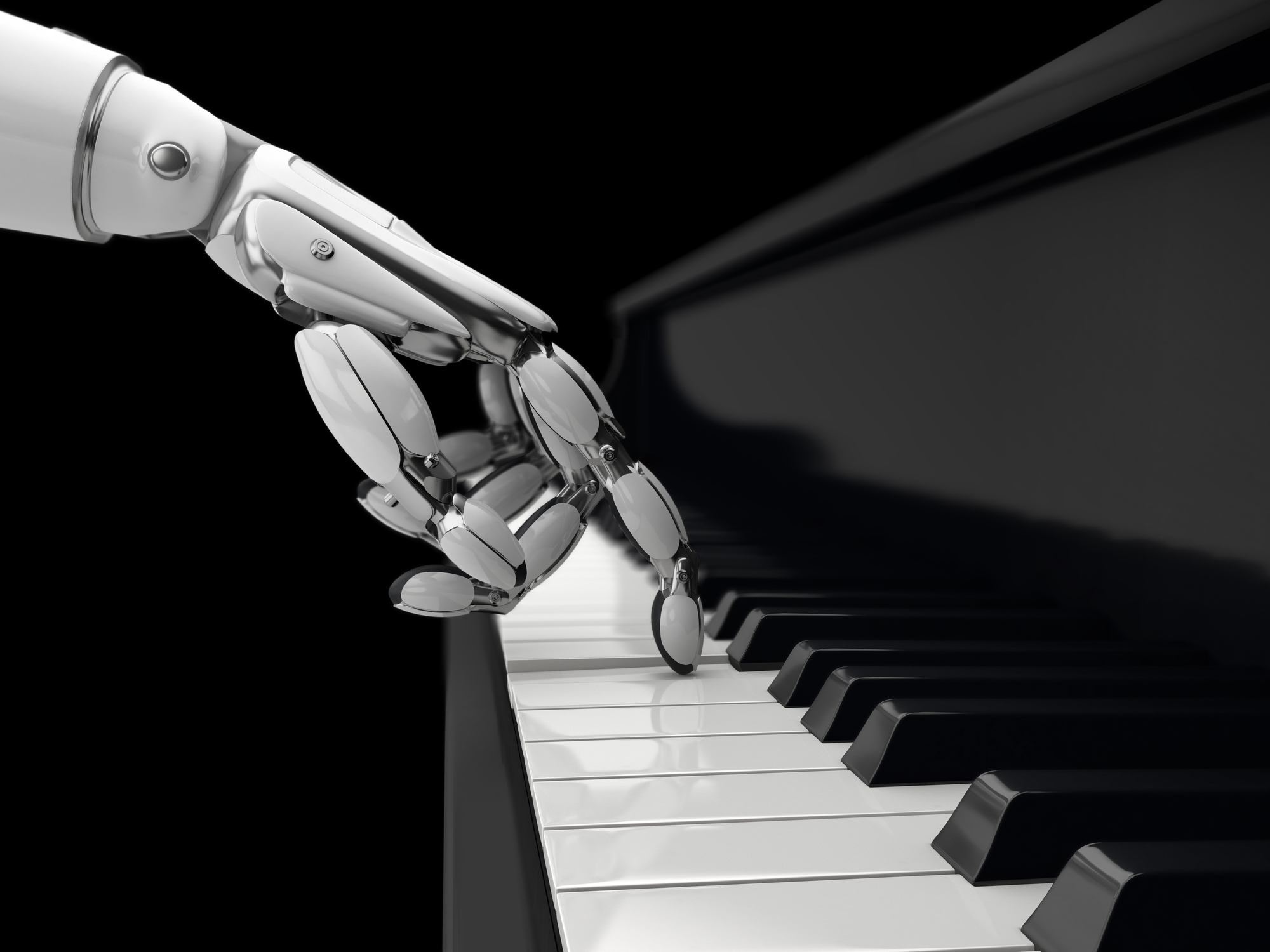
To mark this long weekend, why not dive into a lighter subject?
In the winter of 2023, Nick Cave—the punk-rock crooner born from the whirlwind of the 1980s—vented his frustration over a song created using ChatGPT based on his own writing style. The post, published on his blog The Red Hand Files, repeats ad libitum that AI-generated text is devoid of all the qualities that define great poetry, concluding that it is, quite literally, “bullshit.” Nick Cave’s post seems exemplary to us, as it clearly summarizes the positions and contradictions surrounding this subject.
In essence, the singer’s prose can be summarized in four points:
- Songwriting is about guts: “It’s a blood and guts business, here at my desk, that requires something of me to initiate the new and fresh idea.”
- AI has neither guts nor human experience: “ChatGPT’s melancholy role is that it is destined to imitate and can never have an authentic human experience.”
- For this reason, what AI produces is worthless (“this song sucks”) as a work of art. AI production cannot claim to express the human experience of self-transcendence in the creative act: “Writing a good song is not mimicry, or replication, or pastiche, it is the opposite. It is an act of self-murder that destroys all one has strived to produce in the past… it is the redemptive artistic act that stirs the heart of the listener, where the listener recognizes in the inner workings.”
- This path likely leads us to hell, as AI is not going away: “It can never be rolled back, or slowed down, as it moves us toward a utopian future, maybe, or our total destruction… The apocalypse is well on its way.”
This uncompromising stance may be surprising coming from a veteran of the musical avant-garde. To understand it, let’s try to place generative AI within the perspective of the music Nick Cave creates. In fact, our singer-songwriter was positioned at the heart of the counter-culture during the first part of his career—a period many fans consider his most interesting. A form of reconciliation gradually took place with a more “pop” and lucrative environment. However, Nick Cave has not given up exploring the internal conflicts and dark sides of the human experience.
His imagery is accurately identified by the chorus proposed by the AI: “I am the sinner, I am the saint / I am the darkness, I am the light / I am the hunter, I am the prey / I am the devil, I am the savior.” ChatGPT reproduces the artist’s tropes well, but without capturing the nuances that make poetry. The AI’s ability to summarize texts and highlight salient features is obvious. Does that make it art? Certainly not.
At least, not from the point of view of Nick Cave’s practice. For him, creation is an exploration of the possibilities of form. This permanent disruption is not everyone’s art. A vast landscape of popular music is left aside. This music of the masses, without pretensions of greatness—think of 1990s Dance music—nevertheless represents a huge share of the global music market. This is not the author’s reference point. Nick Cave actually fits squarely into the Romantic myth of the Artist, which he implicitly opposes to the myth of the Machine, born of the Industrial Revolution. The modern mythology of the apocalyptic creature (Terminator, anyone?) is essentially opposed to the vision of the visionary creator. Innovative radicalism is opposed to predictable variability. Yet, the latter is the essence of social media. Here we see how new content is structured around a new medium (we will return to this aspect).
Finally, the listener is called upon. A work created by a machine has no “heart,” making communion with the audience impossible. This argument appeals to intangibles. Let’s just note that we have already heard this regarding rock, punk, metal, hip-hop, and techno. Electric and electronic music supposedly “lack feeling” (sigh).
Nick Cave’s position on AI in music leads to several conclusions:
- AI is part of a toolkit. Objectives must be assigned for its use, and human labor is essential to obtain results that meet expectations. Is the goal to generate a product for the many (the average of past hits) or to invent something unprecedented?
- There is not one “music” but many “musics”; the use of AI may vary for each of them.
- Competition between producers, creators, and solutions will lead to the emergence of new uses and practices.
- Popular music since the 20th century has lived in a close relationship with technology. We are entering a new phase of exploration. This remark applies to many human activities, and À Nos Mots is proud to be among these explorers.
A thorough reflection would actually require a segmentation of audiences and uses. Different audiences call for different qualities. The mass segment is more easily predictable by inference (which is largely what AI does). Within different segments, competition will necessarily push for a rationalization of AI use. Even today, some creators are refocusing the debate by bringing the question back to profit-sharing rules. The industry’s adaptation will be the subject of a follow-up. We can already assume that an authentically creative use would involve a relationship in which the machine feeds the human.
We predict that AI will remain in the field of music. The most convincing examples will initially concern only esoteric experiences and the most commercial pop. AI will join the palette of means available to the producer to achieve objectives related to automation (transpositions, etc.), marketing (decision support), or the exploration of new possibilities. For now, AI will remain a tool in the hands of creators and producers, like a mixing desk or a sampler. Gradually, a “mix” will be found around a new balance to create the music that will accompany our informational revolution. If you want to know more about how this revolution will affect your brand, your workplace, or your civic environment, do not hesitate to contact us to discuss it.